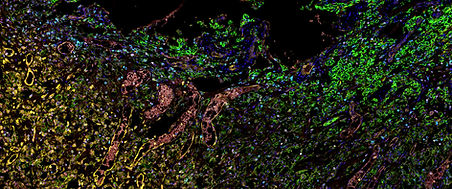
Ferroptosis resistance-related TEP1 as a novel prognostic biomarker involved in immune cell infiltration and tumour progression in glioblastoma
1. 논문 제목: Ferroptosis resistance-related TEP1 as a novel prognostic biomarker involved in immune cell infiltration and tumour progression in glioblastoma
2. 저자명: Kunxiang Chen, Chengzong Zhong, Yiqing Wang, Tao Liu, Huan Chen, Ruizhi Wu, Guanping Qiu, Siqi Zheng, Yong Gao, Yuean Ping, Qiang Zhou, Yuntao Lu and Hong Li
3. 출처 및 게재 (발행일): Cancer Cell International, 3 December 2025
5. Abstract:
5-1 Background: TEP1 is a ribonucleoprotein complex component that binds to telomerase, and its role in GBM development is unclear. This study was designed to investigate the regulatory mechanism of TEP1 in GBM development.
5-2 Methods: TEP1 expression was verified using the TCGA and CGGA databases. Kaplan–Meier survival curve, univariate Cox regression, and multivariate Cox regression analyses were employed to assess the prognostic and predictive value of TEP1. KEGG and GO analyses were conducted to identify signalling pathways and functional gene sets enriched in TEP1-related genes. Immune infiltration was evaluated using the CIBERSORT and ssGSEA algorithms. Single-cell sequencing data were utilized to pinpoint TEP1-enriched cell populations. Drug susceptibility data from the CCLE, GDSC, and CTRP databases were integrated to explore potential therapeutic implications. Further validation was performed using immunofluorescence, quantitative real-time PCR, Western blotting, and in vitro and in vivo ferroptosis assays.
5-3 Results: TEP1 expression was significantly elevated in GBM tissues compared to normal brain tissues, correlating with copy number alterations and poor overall survival. Elevated TEP1 expression correlated with increased tumour malignancy, IDH wild-type status, and radiotherapy resistance. Functional analyses revealed significant associations between TEP1 expression and pathways involved in lipid metabolism, apoptosis, immune response, cell cycle regulation, and ferroptosis. Immune profiling highlighted enrichment of TEP1 in immune cells, particularly plasmacytoid dendritic cells and natural killer T cells. Elevated TEP1 expression was associated with altered sensitivity.
6. 한글 초록 요약본:
본 연구는 telomerase 및 vault RNA와 결합하는 TEP1(telomere-associated protein 1)이 GBM 진행과 ferroptosis resistance에 미치는 영향을 분석함. TCGA, CGGA 등의 public database에서 TEP1은 정상 뇌조직보다 GBM에서 높게 발현되었으며, 높은 TEP1 발현은 높은 종양 grade, IDH wild-type 및 낮은 overall survival과 관련됨. Functional enrichment 및 drug sensitivity 분석에서는 TEP1이 lipid metabolism, cell cycle, immune response 및 ferroptosis와 관련되어 있음을 확인함. 특히 TEP1 knockdown은 RSL3에 의한 lipid peroxidation과 ferroptosis를 증가시킨 반면 TEP1 overexpression은 이를 억제함. Orthotopic U87MG mouse model에서도 RSL3 50 mg/kg IP 투여가 종양 성장을 억제하고 생존을 연장했지만 TEP1 overexpression은 이러한 효과를 감소시킴. 따라서 TEP1은 GBM에서 ferroptosis resistance를 촉진하는 인자이자 RSL3 치료 반응성을 조절하는 잠재적 therapeutic target으로 제시됨.
7. 한글 논문 요약본
7-1 Introduction:
GBM은 높은 재발률과 치료 저항성으로 인해 새로운 therapeutic target이 필요한 악성 뇌종양임. TEP1은 telomerase 및 vault RNA와 관련된 단백질이지만 GBM에서의 기능은 명확하지 않음. 한편 ferroptosis는 GPX4 감소와 lipid peroxidation에 의해 유도되는 세포사멸로 새로운 GBM 치료 전략으로 주목받고 있음. 본 연구에서는 TEP1이 GBM progression과 ferroptosis resistance, 특히 RSL3 sensitivity에 미치는 영향을 확인하고자 함.
7-2 Methods:
A. Bioinfomatics: TCGA, CGGA, GEO 및 CPTAC 데이터를 이용해 TEP1 발현, 예후 및 관련pathway를 분석하고 single-cell RNA-seq와 drug sensitivity database를 통해 immune infiltration 및 ferroptosis 관련성을 평가함.
B. In vitro: U87MG, T98G, LN229, A172, U251 및 patient-derived GBM cell에서 TEP1을 knockdown/ overexpression한 후 RSL3를 처리하여 cell viability, colony formation, GSH, MDA, lipid ROS 및 mitochondrial morphology를 분석함.
C. In vivo: U87MG 세포를 BALB/c nude mouse에 intracranial injection하여 orthotopic GBM model을 제작함. RSL3 50mg/kg을 Day 10–18 동안 2일 간격으로 IP 투여하고 MRI를 통해 tumor volume을 측정함. Survival과 함께 Ki67, TEP1, 4-HNE 및 GPX4를 IHC로 평가함.
7-3 Results:
A. TEP1 발현과 GBM 예후: TEP1은 정상 뇌조직보다 GBM에서 높게 발현되고 있으며 높은 TEP1 발현은높은 tumor grade, IDH wild-type 및 낮은 overall survival과 관련됨.
B. TEP1과 ferroptosis의 연관성: Functional 및 drug sensitivity 분석에서 TEP1은 ferroptosis 관련 pathway 및 RSL3 sensitivity와 연관됨. TEP1 knockdown은 RSL3 처리에 따른 GSH 감소, MDA/lipid ROS 증가 및 mitochondria shrinkage를 강화하여 ferroptosis를 촉진함.
C. In vivo RSL3 항종양효과: Orthotopic GBM model에서 RSL3 50mg/kg IP는 tumor growth를 억제하고 survival을 연장함. 반면 TEP1 overexpression은 RSL3의 항종양효과와 ferroptosis를 감소시켜 TEP1이 RSL3 resistance factor로 작용함을 확인함.
8. 대표 figure
Fig 9. TEP1 inhibits RSL3-mediated ferroptosis in vivo.


댓글